Technical Dossier — WP/ENA1·Edition 2026·For the attention of the buyer
International supply of solid biofuel
ENplus A1Wood Pellets
A complete technical and commercial briefing on premium wood pellet fuel — how it is made, what the standard guarantees, how it performs against fossil alternatives, and how it reaches a buyer in Türkiye from the forest belt of the Russian Federation.
Gaz-Trans International · NİMPRECAST Yapı Elemanları San. Tic. Ltd. Şti.
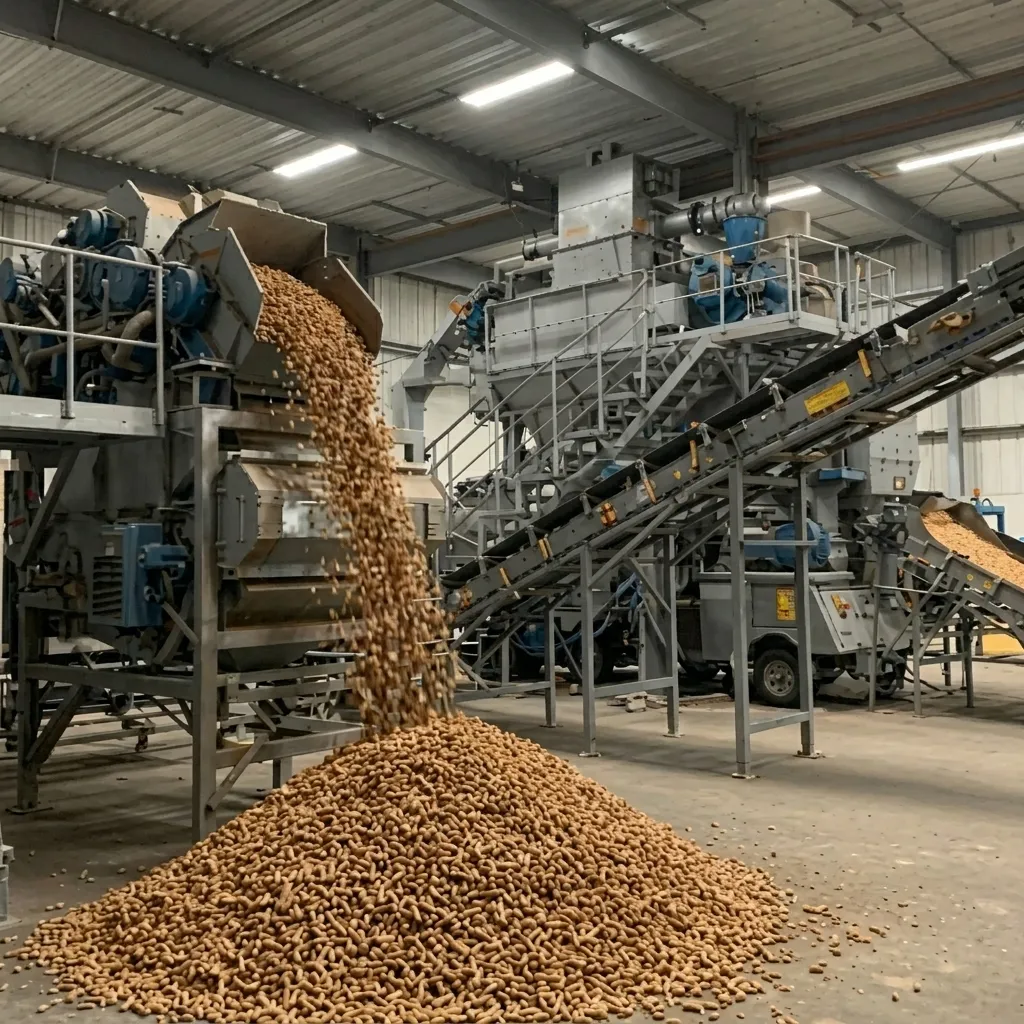
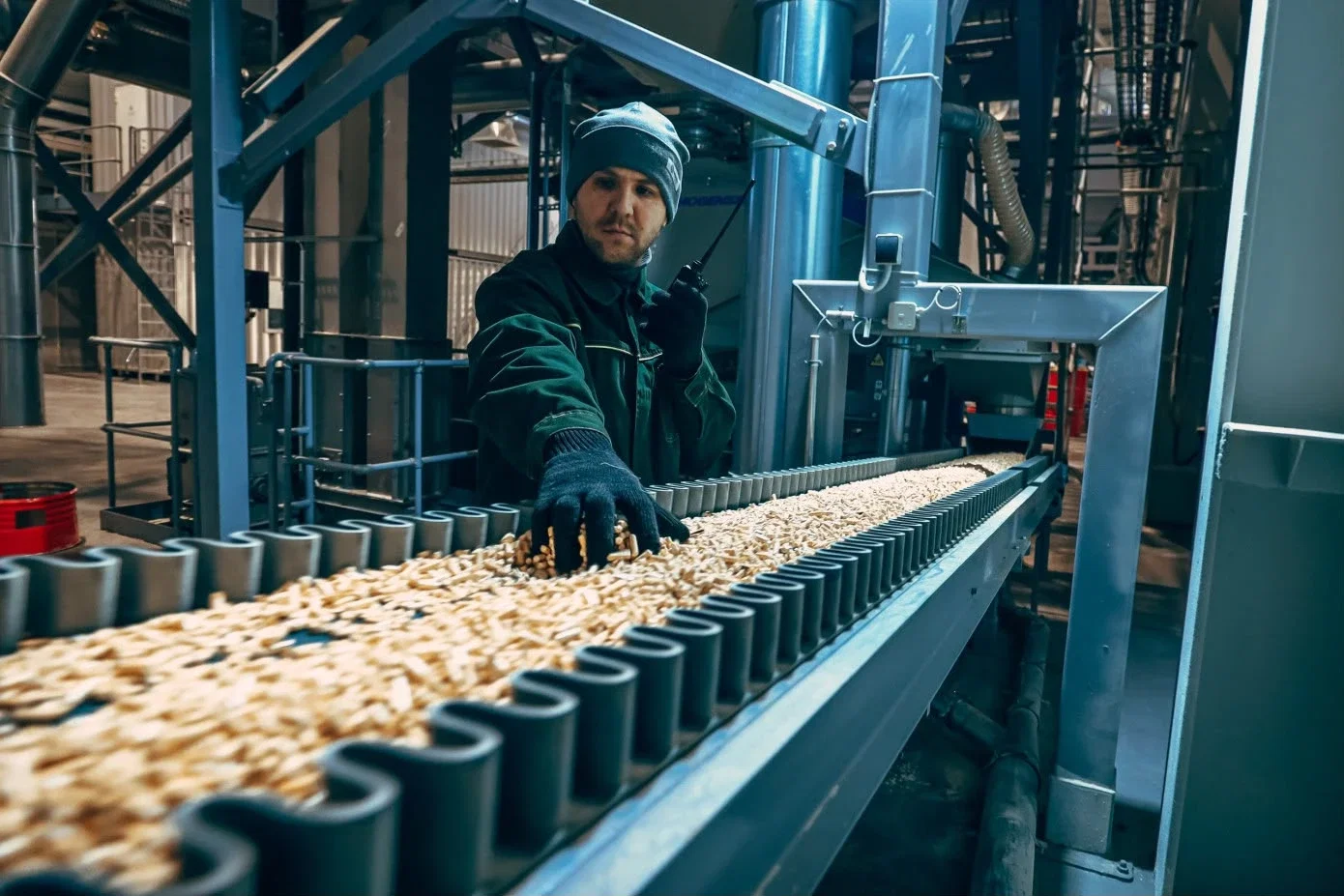
Finished ENplus A1 pellets discharging from the cooler at the end of a pelletising line
Standard
ISO 17225-2
ENplus A1 / DINplus
Entry volume
3,000 t
per month, minimum
Scalable to
25,000 t
per month, contracted
Upper ceiling
75,000 t
per month, maximum
01 / 12Preamble · Parties to the supply
What this document sets out
A pellet is a commodity that is bought on a certificate, not on appearance. Everything that follows exists to make that certificate legible — what each figure means, where it comes from, and what it will do inside a burner.
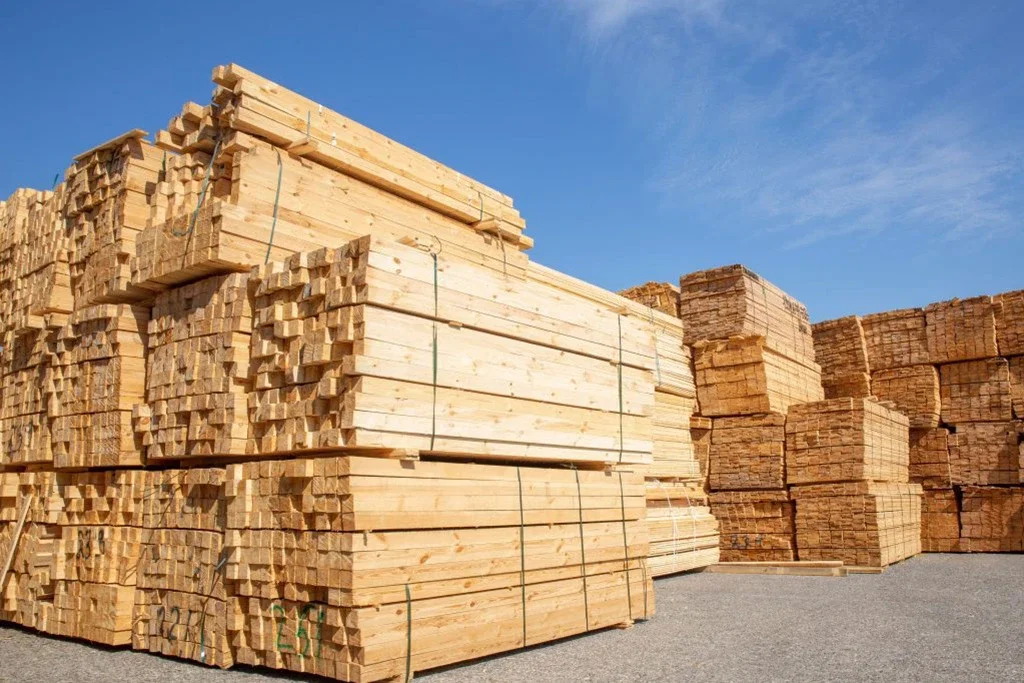
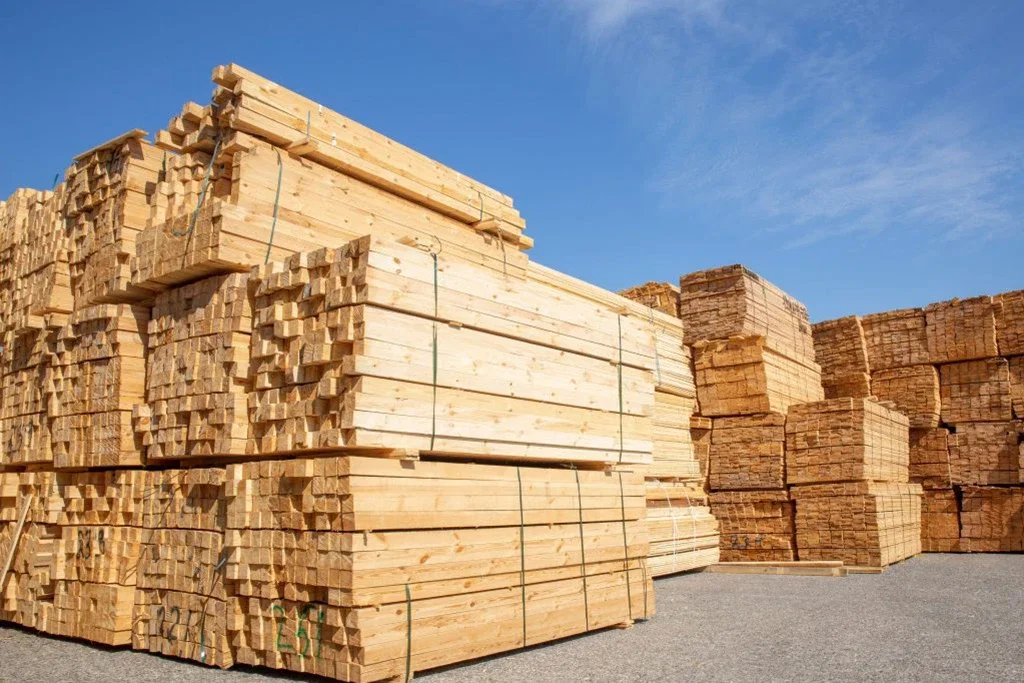
The resource — sawn softwood in yardThe corridor — timber wagons at the railhead
Gaz-Trans International conducts activities aimed at supplying ENplus A1 / DINplus grade wood pellets to international markets in a reliable, consistent manner and in accordance with technical standards through its partner and trusted intermediary in Türkiye, NİMPRECAST Yapı Elemanları Sanayi Ticaret Ltd. Şti. Independent of any commercial offer or pricing, this document examines in detail the technical elements that define high-quality fuel pellets.
The following pages have deliberately been prepared with a technical focus. Two pellet consignments classified under the same ENplus A1 grade may perform significantly differently in a boiler or stove depending on the raw-material source, moisture content, ash content, mechanical durability, amount of fines, bulk density and production conditions. For this reason, the document focuses not only on the name of the certification, but on the technical characteristics of the product itself. It explains which raw materials are acceptable, how the feedstock is prepared for production, how pressing affects pellet structure and the role of natural lignin in this process. It also evaluates the principal limits applied under ISO 17225 and the ENplus quality system, together with the effects of these limits on product performance.
The first step in this technical assessment is to define correctly the raw material that forms the basis of the pellet. One of the principal feedstock groups widely used in premium wood-pellet production is softwood.
Schedule of parties and governing specification
01Supplier
GAZ-TRANS INTERNATIONAL Oil Group
Aggregates, packages and prepares export-grade pellet volumes; carries the quality guarantee and the export documentation.
02Intermediary in Türkiye
NİMPRECAST Yapı Elemanları San. Tic. Ltd. Şti.
Holds the buy-side mandate, coordinates specification, inspection and delivery into the Turkish market.
03Production base
Four integrated forestry complexes
Arkhangelsk, Tatarstan and Irkutsk regions — combined nameplate capacity above 730,000 t/year of pellet output.
04Governing specification
ISO 17225-2 · ENplus A1 / DINplus
The full parameter set — origin, dimension, moisture, density, calorific value, ash and mechanical durability.
01·A / 12Feedstock · Softwood
Softwood as raw material and its effect on pellet quality
Softwood is a category of timber derived from coniferous (gymnosperm) tree species, generally characterized by their fast growth and lightweight structure. Despite its name, the term “softwood” does not imply that it is always physically softer than hardwood. Rather, it is a biological and botanical classification that includes common species such as pine, spruce, fir, and cedar.
Principal coniferous species
01PinePinus
02SprucePicea
03FirAbies
04CedarCedrus
Coniferous stand — the feedstock base of premium pellet production
02 / 12The product · Physical identity
Wood, without the water and the air
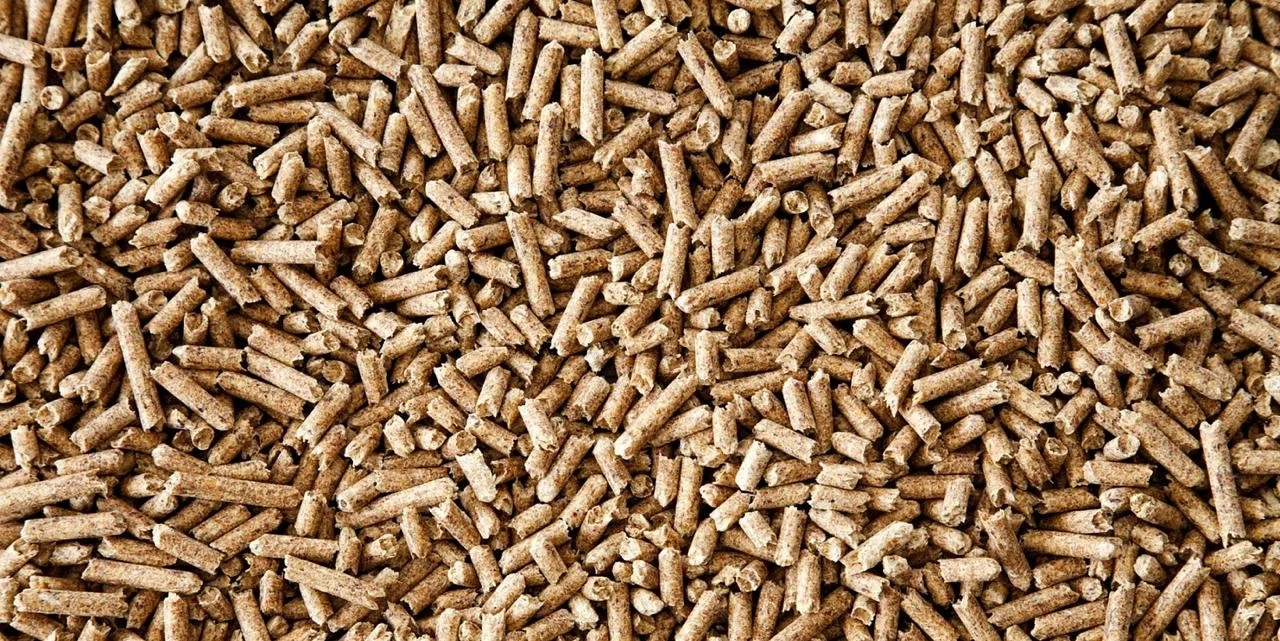
A wood pellet is not a manufactured compound. It is sawdust from clean coniferous timber — shavings, chips and mill residue — dried to single-figure moisture and forced under extreme pressure through a hardened steel die. Nothing is added. The friction of that passage raises the material past roughly ninety degrees, at which point the lignin already present in the wood cell wall softens, flows around the compressed particles and then sets as the pellet cools. The binder, in other words, was in the tree.
That single fact governs almost everything a buyer cares about. Because no glue, wax or starch is introduced, the ash left after combustion is only the mineral content the tree itself carried — which is why a premium pellet made from debarked softwood leaves well under one percent of its mass behind, while the same press fed with bark or field residue will leave several times that.
What the process removes is equally important. Green timber carries forty-five to fifty-five percent water; every kilogram of it must be evaporated before pressing, and every kilogram left behind would otherwise be evaporated inside the customer's boiler at the direct expense of useful heat. Drying to eight percent and then compressing to a particle density above eleven hundred kilograms per cubic metre turns a bulky, perishable residue into a dense, storable, free-flowing solid.
The result behaves far more like a liquid fuel than like firewood. It pours, it meters, it can be augered or blown pneumatically, it can be dosed automatically by a controller responding to a room thermostat, and it occupies roughly a quarter of the volume of the loose wood chip that carries the same energy. It is this handling behaviour — not the calorific value alone — that made the pellet the only wood fuel able to compete with oil and gas in an automated European heating system.
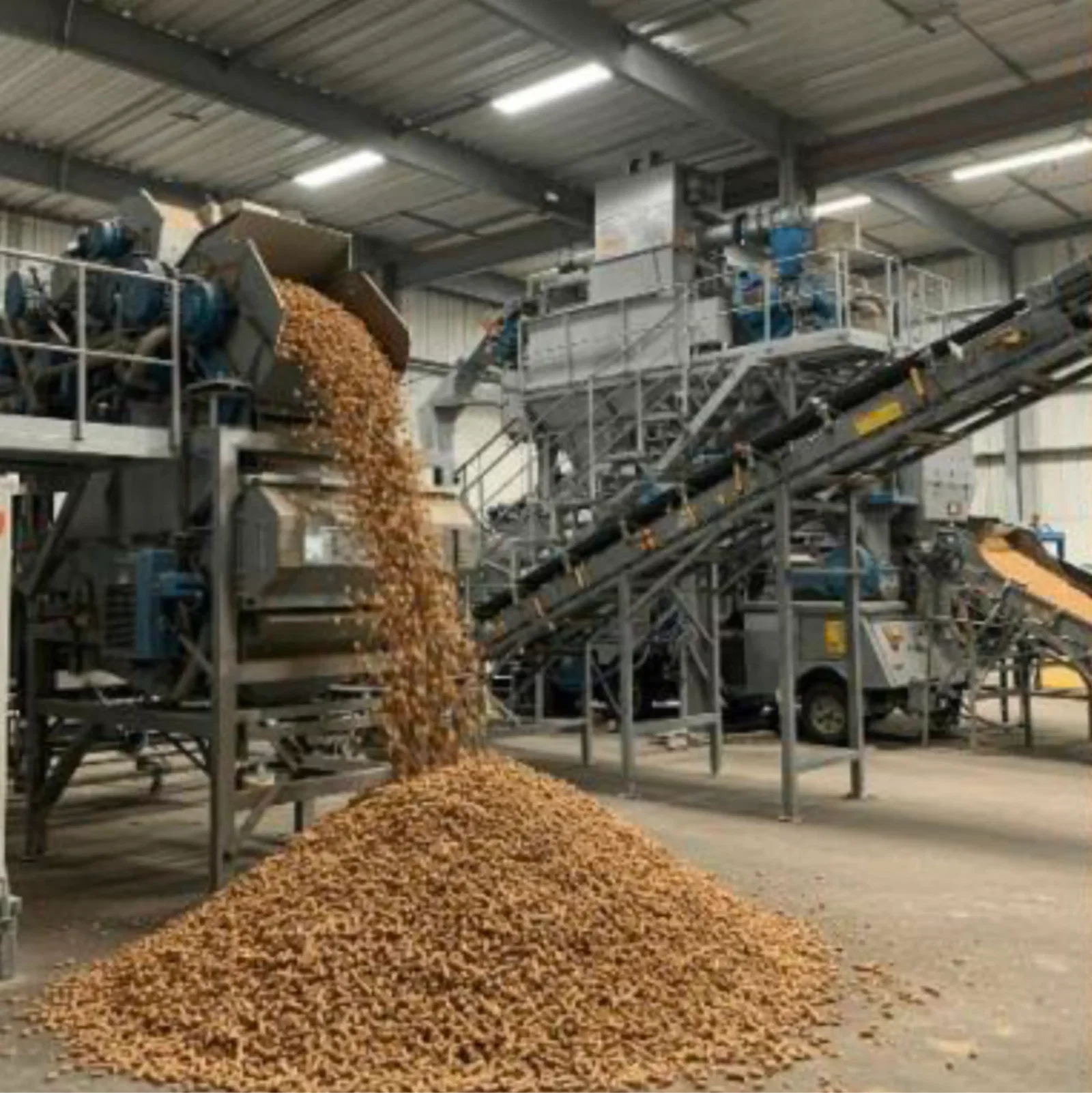
Cooled pellets accumulating below the discharge chute — uniform colour and length indicate stable die pressure and correct feedstock moisture
Table 1 — Physical identity of an ENplus A1 pellet
Property
Value
Significance
Diameter
6 mm / 8 mm
Die-determined; 6 mm dominates the residential market
Length
3.15 – 40 mm
Cut at the die face; over-length fines are screened out
Bulk density
600 – 750 kg/m³
Governs silo sizing and freight cube
Particle density
≈ 1,100 – 1,200 kg/m³
Denser than water — a sound pellet sinks
Moisture
≤ 10 %
Typically delivered at 6 – 8 %
Binder
None added
Lignin released under pressure is the only adhesive
Energy density
≈ 3.2 MWh/m³
Roughly four times that of loose wood chip
Storage life
Indefinite, dry
Contingent on ventilation and moisture exclusion
Particle density is the density of the pellet body itself; bulk density is the density of a poured mass including the void space between pellets. Freight and silo calculations use bulk density; combustion behaviour and durability follow particle density.
03 / 12Production · Eight stages
From forest to fuel
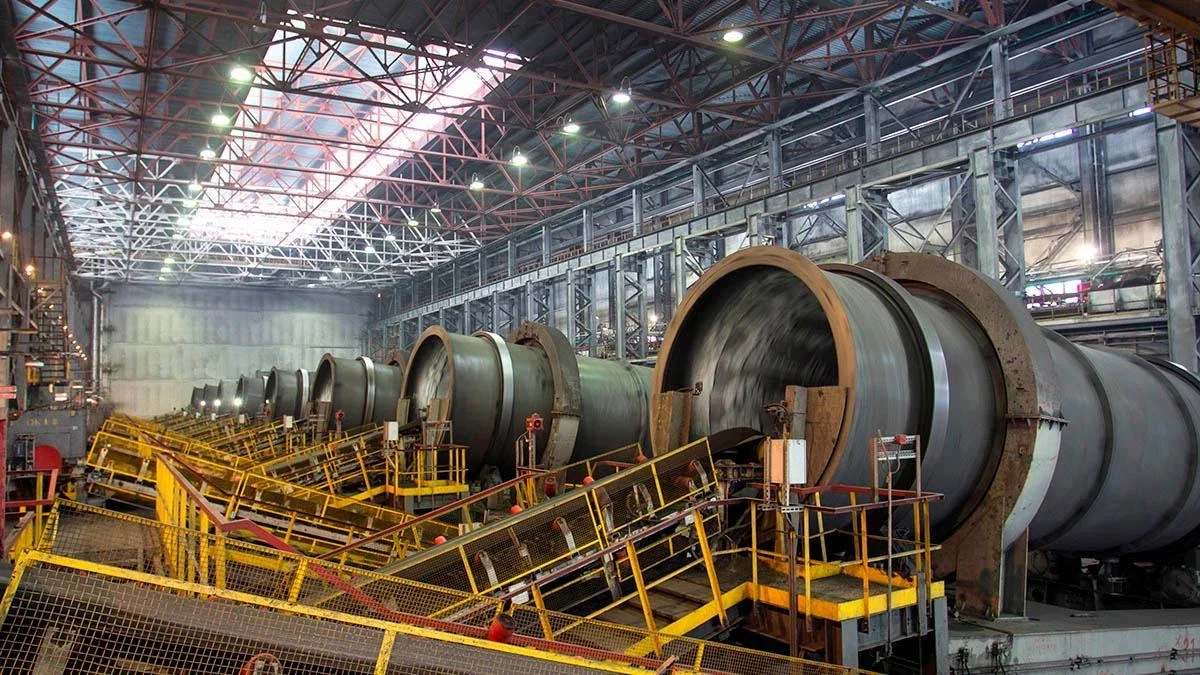
A pellet plant is a drying plant with a press attached. Roughly two thirds of the energy consumed on site goes into evaporating water, and most quality failures in the finished product can be traced back to a moisture figure that drifted before the material ever reached the die.
Feedstock yard — debarked softwood and sawmill residueRotary drum dryers — the plant's principal energy consumerCooler discharge — pellets reach final hardness as they return to ambient
01
Reception & debarking
Roundwood and mill residue are received and bark is stripped. Bark carries the bulk of a tree's mineral load, so this single step decides whether the run can reach A1 ash limits at all.
Ash pathway
02
Chipping & screening
Oversize material is reduced to a uniform chip. Consistent particle size is what allows the dryer and the die to behave predictably across a whole shift.
Uniformity
03
Drying
Rotary drum or belt dryers take the feedstock from 45–55 % moisture down to 8–12 %. This is the most energy-intensive stage in the plant and the one that sets the mill's true production cost.
45 % → 10 %
04
Hammer milling
The dried chip is ground to a fine, evenly graded flour. Particles must be smaller than the die channel diameter or the press will not form a coherent pellet.
Fine grade
05
Conditioning
Controlled steam or water is reintroduced to soften the fibre immediately before pressing. Too little and the pellet crumbles; too much and it emerges soft and swells in storage.
Steam
06
Pelletising
Rollers force the conditioned flour through the die. Friction raises the temperature past the lignin softening point; the extrudate is cut to length as it emerges.
≈ 90 °C
07
Cooling
Pellets leave the die hot and plastic. Counter-flow coolers bring them back to ambient, at which point the lignin sets and the pellet reaches its final hardness and durability figure.
Sets hardness
08
Screening, storage & packing
Fines and broken material are sieved out and returned to the mill. Sound pellets go to silo, big bag or fifteen-kilogram retail sack under controlled humidity.
Fines removed
The eight stages are not independent. A dryer running two points wet forces the conditioner to add less steam, which lowers die temperature, which softens the lignin less completely, which shows up three steps later as a durability figure below ninety-eight percent and an unacceptable quantity of fines in the buyer's silo. This is why a credible supplier is one that measures at the die and at the bagging line, not only on the certificate.
04 / 12The standard · ISO 17225-2
What the certificate actually guarantees
The European specification for wood pellets began life as EN 14961-2 and was superseded in 2014 by the international standard ISO 17225-2, which remains the governing document. It defines the admissible origin of the raw material and then fixes numerical limits for dimension, moisture, bulk density, net calorific value, ash, mechanical durability, fines and a short list of elements — nitrogen, sulphur and chlorine — whose presence determines corrosion and emissions behaviour. ENplus is the certification scheme built on top of that standard; DINplus is its close German equivalent.
Three of these figures do most of the work. Ash content decides how often a boiler must be cleaned and whether clinker forms on the grate. Mechanical durability decides how much of the consignment survives blowing, augering and free-fall into a silo as an intact pellet rather than as dust. Net calorific value decides how many tonnes buy a given quantity of heat. The remaining parameters are guard-rails: they exist to catch a feedstock that has been contaminated with bark, soil, adhesive-bearing board or treated timber.
Table 2 — Property class comparison to ISO 17225-2Governing parameter
Parameter
Unit
ENplus A1
ENplus A2
ENplus B
Test method
Diameter
mm
6 ± 1 / 8 ± 1
6 ± 1 / 8 ± 1
6 ± 1 / 8 ± 1
ISO 17829
Length
mm
3.15 – 40
3.15 – 40
3.15 – 40
ISO 17829
Moisture
w-% ar
≤ 10
≤ 10
≤ 10
ISO 18134
Ash
w-% dry
≤ 0.7
≤ 1.2
≤ 2.0
ISO 18122
Mechanical durability
w-%
≥ 98.0
≥ 97.5
≥ 96.5
ISO 17831-1
Fines (< 3.15 mm)
w-%
≤ 1.0
≤ 1.0
≤ 1.0
ISO 18846
Net calorific value
MJ/kg ar
≥ 16.5
≥ 16.3
≥ 16.0
ISO 18125
Bulk density
kg/m³
600 – 750
600 – 750
600 – 750
ISO 17828
Nitrogen
w-% dry
≤ 0.3
≤ 0.5
≤ 1.0
ISO 16948
Sulphur
w-% dry
≤ 0.04
≤ 0.05
≤ 0.05
ISO 16994
Chlorine
w-% dry
≤ 0.02
≤ 0.02
≤ 0.03
ISO 16994
Ash deformation temp.
°C
≥ 1,200
≥ 1,100
≥ 1,100
CEN/TS 15370
Additives
w-%
≤ 2
≤ 2
≤ 2
Declared
A1
Stemwood and chemically untreated wood residues only. In practice this means debarked softwood, clean sawdust and planer shavings. This is the grade supplied under this offer — the white premium pellet, minimum ash, intended for automatic domestic boilers and the European retail market.
A2
Admits whole trees without roots, logging residues and a proportion of bark. Visibly darker, measurably higher in ash and slightly lower in heating value. Suited to small commercial boiler houses and municipal plant where ash removal is scheduled rather than incidental.
B
Chemically untreated industrial wood by-products and recovered wood. An industrial fuel: burnt in large boiler houses and in power stations, alone or co-fired with coal. Almost never used in domestic appliances, which are not built to tolerate its ash load.
Abbreviations: ar = as received; w-% = percentage by mass. Ash is reported on a dry basis, moisture and calorific value as received. Fines are measured at the point of packaging or loading, since further degradation occurs in transit and cannot be attributed to the producer. All products under this offer are supplied to the A1 column.
05 / 12Applications · Where the tonne is burnt
One fuel, six very different burners
The grade a buyer needs is dictated almost entirely by who empties the ash. In a domestic boiler nobody is watching; the appliance must run unattended through a heating season, so it is engineered around a fuel that leaves almost nothing behind. Move up the scale to a municipal boiler house with a maintenance crew on shift and that constraint relaxes, which is precisely why A2 and B grades exist and why they are cheaper.
Specifying above requirement wastes money; specifying below it destroys equipment. A domestic condensing pellet boiler fed with an industrial grade will accumulate clinker on the grate within weeks, foul its heat exchanger and eventually refuse to modulate. The matrix below is therefore the practical translation of the standard — it maps each class onto the appliance it was written for.
Line inspection at the screening deck — length consistency and fines content are checked by hand between instrument samples
Table 3 — Application matrix by appliance class
Application
Typical output
Grade
Operating character
Domestic pellet boiler
10 – 40 kW
A1
Fully automatic, silo-fed, thermostat-controlled. Ash bin emptied a few times per season. The grade is not negotiable — A2 will clinker the grate.
Pellet stove (room heater)
6 – 12 kW
A1
Hopper filled by hand from 15 kg sacks. Dominant appliance in Italian and southern-European households.
Commercial boiler house
50 kW – 1 MW
A1 / A2
Hotels, schools, workshops, apartment blocks. Bulk silo with pneumatic filling; scheduled ash removal permits the A2 grade.
Municipal / district heating
1 – 20 MW
A2 / B
Continuous base load with staff on site. Grate and ash handling are designed for the higher mineral load.
Power generation
> 20 MW
B
Fired alone or co-fired alongside coal. The United Kingdom and Japan consume industrial pellets on this basis at very large scale.
Horticultural glasshouse
0.5 – 5 MW
A2 / B
Heat and, where the plant is configured for it, a CO₂ stream for crop enrichment.
What the fuel does well
A premium pellet delivers roughly 4.6 to 5.3 kilowatt-hours per kilogram at a moisture content of six to ten percent and an ash content below one percent, and it does so from a renewable, domestically abundant feedstock. Because it flows, it can be stored in a sealed silo and metered automatically, which removes the labour that has always made solid fuel unattractive in a modern building. Direct thermal conversion efficiency reaches around eighty percent, and lifecycle greenhouse gas emissions fall well below those of heating oil or natural gas on a like-for-like heat basis.
What it demands in return
The fuel must be kept dry — absolutely and without exception. A pellet that takes on water swells, disintegrates and blocks the auger, and a wet mass in a silo will begin to self-heat. It also requires purpose-built equipment: a pellet boiler or burner, not a converted wood stove. And its price is seasonal and regional, rising through the autumn as European stocks are drawn down and easing again in spring and summer, which rewards buyers who contract volume ahead of the heating season rather than into it.
06 / 12Performance · Energy and emissions
What a tonne is worth in heat
Solid fuels are quoted by mass, liquid fuels by volume and gas by cubic metre, which makes direct comparison awkward at exactly the moment a buyer needs it. The table below resolves all of them onto a single basis: the quantity of each fuel required to deliver the heat contained in one tonne of ENplus A1 pellets.
16.5MJ/kg
Net calorific value
Minimum, as received, ENplus A1
4.6 – 5.3kWh/kg
Usable heat
The same figure expressed for boiler sizing
≈ 80%
Conversion efficiency
Direct thermal, modern automatic appliance
< 1%
Residual ash
Premium grade; A1 limit is 0.7 % dry
Table 4 — Fuel equivalence on a common heat basis
Fuel
Equivalent quantity
Gross heat
Remark
Wood pellets, ENplus A1
1,000 kg
≈ 4,800 kWh
Reference quantity
Heating oil / diesel
≈ 500 litres
≈ 4,950 kWh
One tonne of pellets displaces roughly half a cubic metre of oil
Heavy fuel oil
≈ 685 litres
≈ 4,900 kWh
Lower grade oil, correspondingly larger volume
Natural gas
≈ 480 m³
≈ 4,700 kWh
Subject to local calorific declaration
Steam coal
≈ 650 kg
≈ 4,900 kWh
Comparable energy, materially higher CO₂ and sulphur
Air-dried firewood
≈ 1,900 kg
≈ 4,800 kWh
Nearly double the mass and roughly four times the volume
The carbon position
The carbon released when a pellet burns was drawn from the atmosphere by the tree that produced it, and is reabsorbed as the managed forest regrows — which is why pellet heat is treated as renewable under European energy policy and why the ENplus chain of custody insists on documented, sustainably managed sources. Counting the whole lifecycle, including harvesting, drying, pelletising and freight, wood pellet heat has been measured at roughly half the greenhouse gas burden of the fossil alternatives it replaces in a domestic system.
54 %lower than heating oil
59 %lower than natural gas
Equivalences are calculated on net calorific value at 16.5 MJ/kg for pellets, before appliance efficiency, and are indicative for planning purposes rather than contractual. Local gas calorific declarations, coal grade and firewood species and seasoning will move the figures by several percent in either direction. Lifecycle emissions comparisons follow published assessments of pellet heating against oil and gas in temperate residential use.
07 / 12Origin · The production base
Where the tonnage comes from
Pellets are supplied from four leading manufacturers in the Russian Federation, drawing on the boreal softwood belt of the Arkhangelsk region together with production in Tatarstan and Irkutsk. Combined nameplate capacity across the named complexes exceeds seven hundred and thirty thousand tonnes a year, which is what allows a contract to open at three thousand tonnes a month and be scaled without renegotiating the feedstock base.
The commercial reason for aggregating across four producers rather than one is continuity of specification. A single mill has a single dryer and a single die; when either is down for maintenance, the buyer's programme stops. Drawing on parallel A1-capable lines allows the same specification to be held month after month, and allows a shipment to be assembled from whichever plant is running to grade at the time of loading.
Sawn softwood in yard — the residue stream from timber processing is the primary feedstock for premium pellet production
Table 5 — Supplying production complexes
Producer
Region
Capacity t/yr
Feedstock
Character
VGR Group (Lesresurs)
Arkhangelsk Region
300,000+
Softwood
Export-quality A1 production with an established shipping record. Formerly Europe-facing; now serving Türkiye, China, South Korea and other destinations.
ULK Group — Ustyansky Forestry Complex
Arkhangelsk Region
250,000+
Softwood
One of the largest forestry complexes in the Russian Federation, operating on its own raw material base. Vertical integration from stand to pellet keeps feedstock composition unusually stable.
Kronospan Russia
Republic of Tatarstan
≈ 180,000
Own wood residues
Pellets pressed from the panel plant's own process residues — a closed loop in which the pellet line consumes what the board line cannot use.
Segezha Group
Irkutsk, Arkhangelsk and other regions
Multi-site
Softwood
Among the largest forestry holdings in the country, running several production sites. Export-grade output with a substantial share directed at Asian markets.
Resource depth
The Russian Federation holds the largest forest area of any country. Combined with mature wood-processing infrastructure and low delivered raw material cost, this gives its pellet producers a structural cost position that European mills cannot match — raw material is forty to sixty percent of the cost of a pellet, and it is precisely the component that is cheapest here.
Cost of conversion
Beyond the feedstock, the cost of a pellet is electricity, drying fuel, pressing, packaging, labour and the amortisation of some very expensive equipment. Production is energy-intensive by nature; a mill sited next to its own forest and its own power is therefore not a marginal advantage but the whole economic argument.
Seasonality
Demand peaks from September through December as the northern heating season opens and European stocks are drawn down. Prices typically ease again in spring and summer. Buyers who contract volume in the low season and take delivery ahead of the peak carry inventory but avoid both the price and the vessel-availability squeeze.
08 / 12Packaging · Unitisation
How the tonnage is made liftable
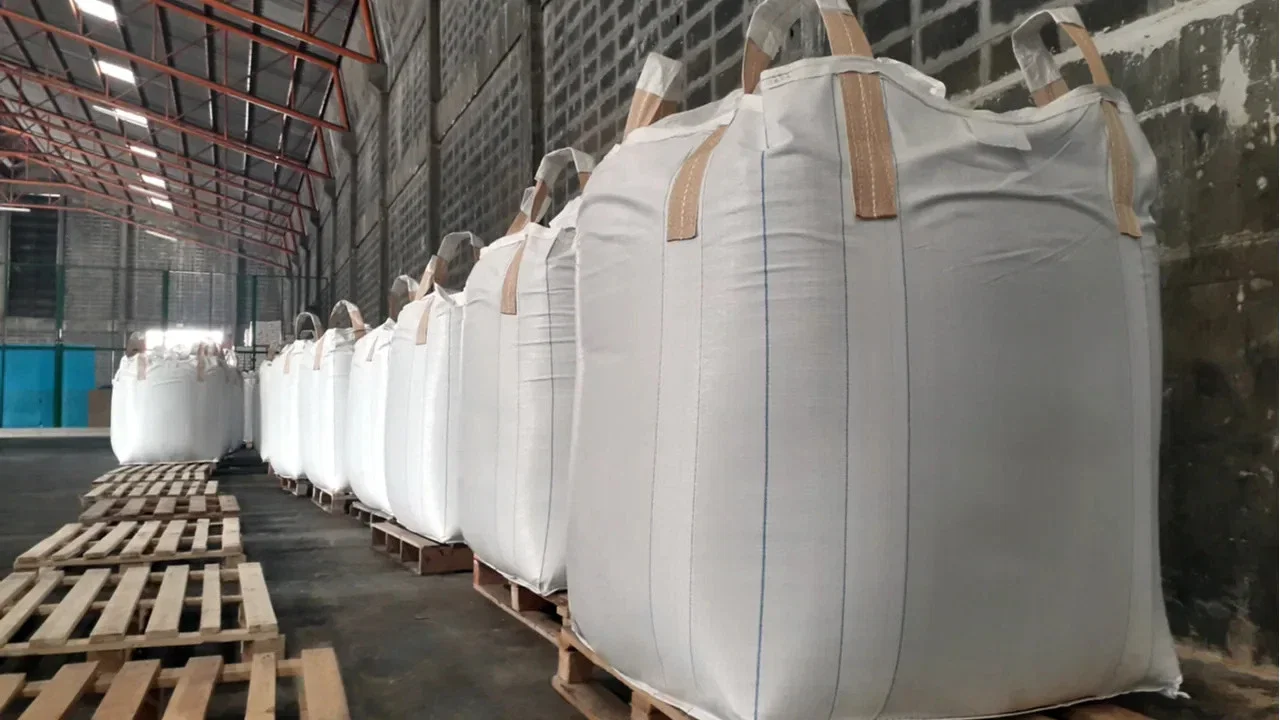
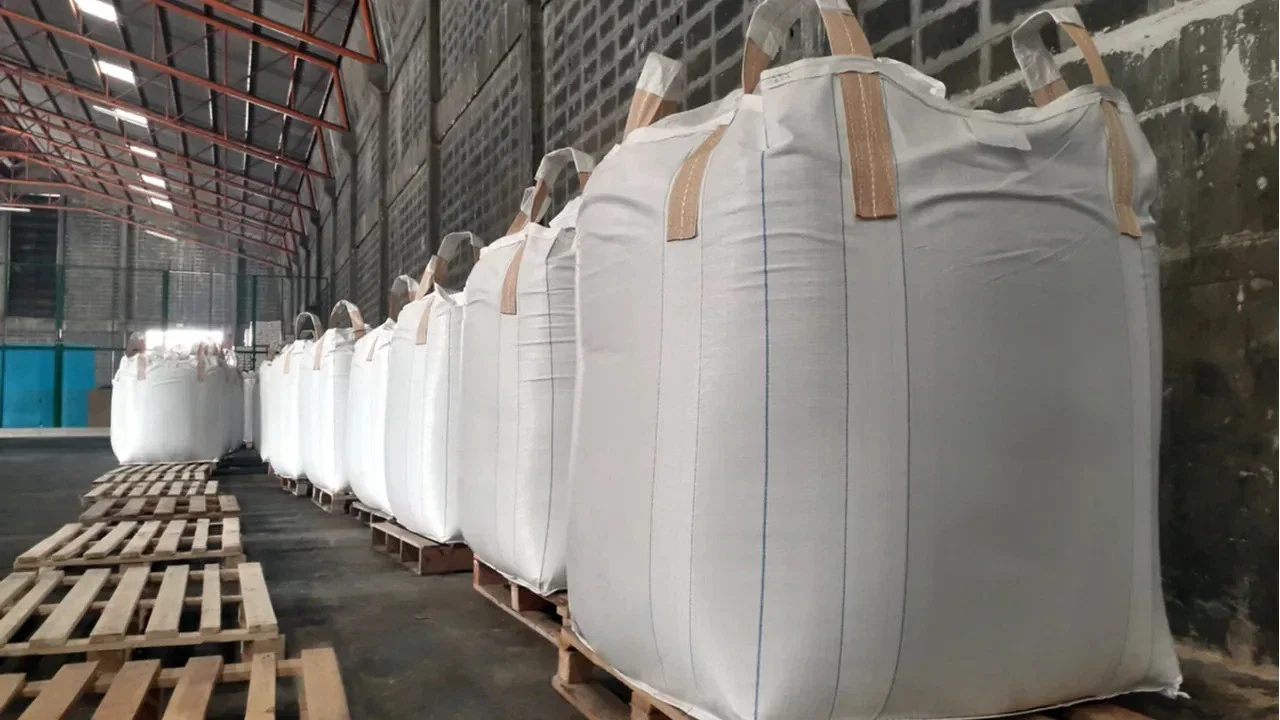
Packaging is not a presentational choice — it determines who can receive the cargo. A buyer with a quayside silo and a pneumatic line wants loose bulk and will pay least per tonne for it. A distributor supplying stove owners needs fifteen-kilogram sacks on shrink-wrapped pallets, because that is the only unit a household can carry. Most industrial and commercial buyers sit between the two and take flexible intermediate bulk containers.
Packaging is also the last line of defence for the specification. Pellets leave the cooler at their certified moisture and durability; every subsequent transfer degrades them slightly. A sealed big bag protects the cargo from rain on an open wagon and from humidity in a transit shed, and it fixes the fines content at the moment of filling rather than leaving it to accumulate through four handling operations.
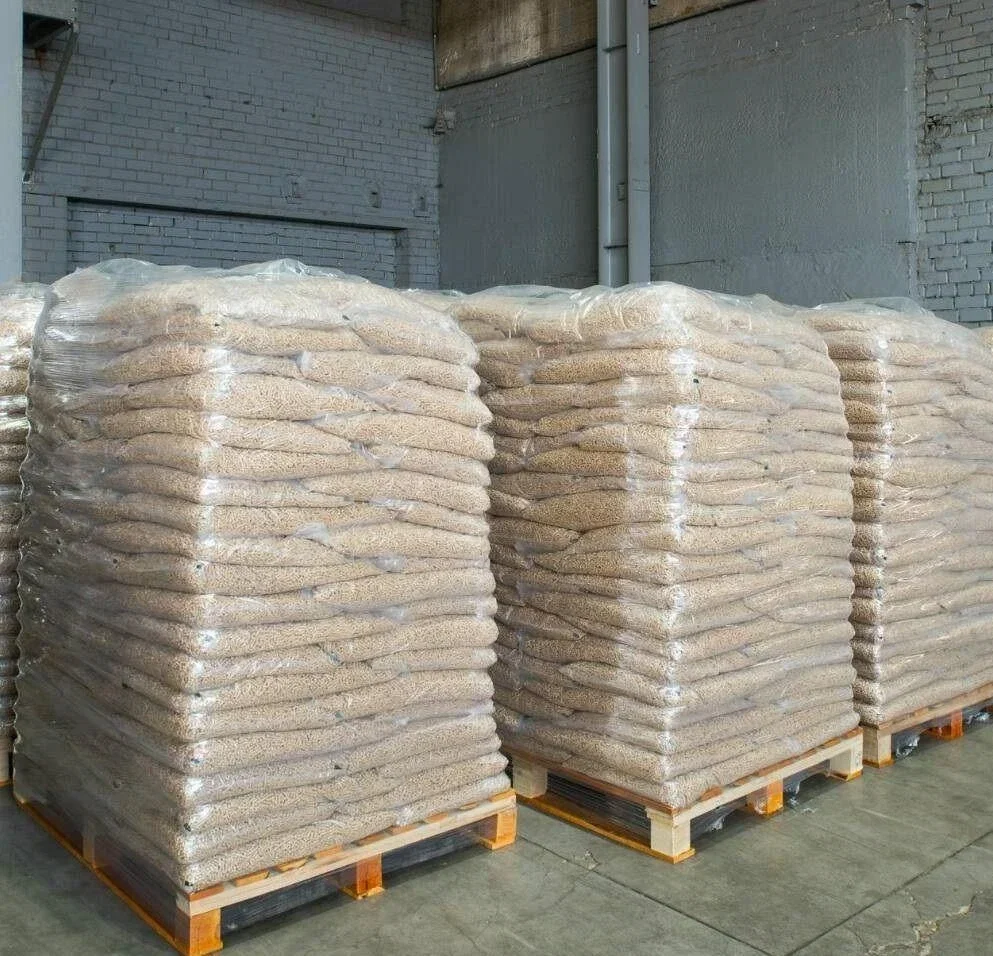
Filled bulk bags on pallets in a covered store — the standard export presentation ahead of rail loading
Table 6 — Packaging formats and their receiving requirements
Format
Unit weight
Handling
Destination
Notes
Retail sack
15 kg
Manual
Stoves · retail
Sealed polyethylene sack, palletised and hood-shrunk. The unit the end consumer actually buys, and the format in which pellets reach a stove hopper.
FIBC big bag
500 kg
Forklift / crane
Small boiler houses
Woven polypropylene bulk bag with lifting loops and a discharge spout. Used where a smaller drop quantity suits the receiving silo.
FIBC big bag
1,000 kg
Forklift / crane
Commercial · export
The common export unit. One tonne per lift keeps the count simple and the manifest legible.
FIBC big bag
1,200 kg
Forklift / crane
Bulk contract
Intermediate unit selected where vessel stowage or warehouse racking favours a denser stack.
FIBC big bag
1,500 kg
Forklift / crane
Primary export unit
The unit used in the reference 4,000-tonne calculation — 2,667 bags per shipment. May also carry 15 kg retail sacks nested inside for onward distribution.
Loose bulk
By hold / silo
Grab / pneumatic
Industrial · power
Unpackaged tonnage discharged directly into shore silo or blown into a customer's store. Lowest cost per tonne, highest requirement on weather protection.
Container equipment accepted
20 DVStandard dry van — the workhorse for palletised retail sacks
40 HCHigh cube — volume-limited rather than weight-limited for pellets
40 HC High-VolumeMaximised internal cube for low-density cargo
Bulk containerLiner-fitted for loose pellet loading and tipping discharge
Open topTop-loading where a big bag cannot be run in through the door
Flat rackOut-of-gauge and project movements alongside the main parcel
For the reference shipment of 4,000 tonnes packed in 1,500 kg bulk bags, the parcel resolves to 2,667 bags. Where retail distribution is the end use, those same bags are filled with pre-packed 15 kg sacks, so that a single lift moves a hundred consumer units without a second bagging operation at destination.
09 / 12Marine · Vessel selection
Matching the parcel to the hull
Sea freight is where pellet economics are usually won or lost. Because the cargo is light for its volume, a vessel is filled by cube long before it is filled by deadweight, and the wrong hull for the parcel size can add more cost per tonne than the entire inland leg. A four-thousand-tonne shipment out of the Black Sea is a coaster or small handy job; committing it to a Panamax would leave most of the hold empty and the freight bill unchanged.
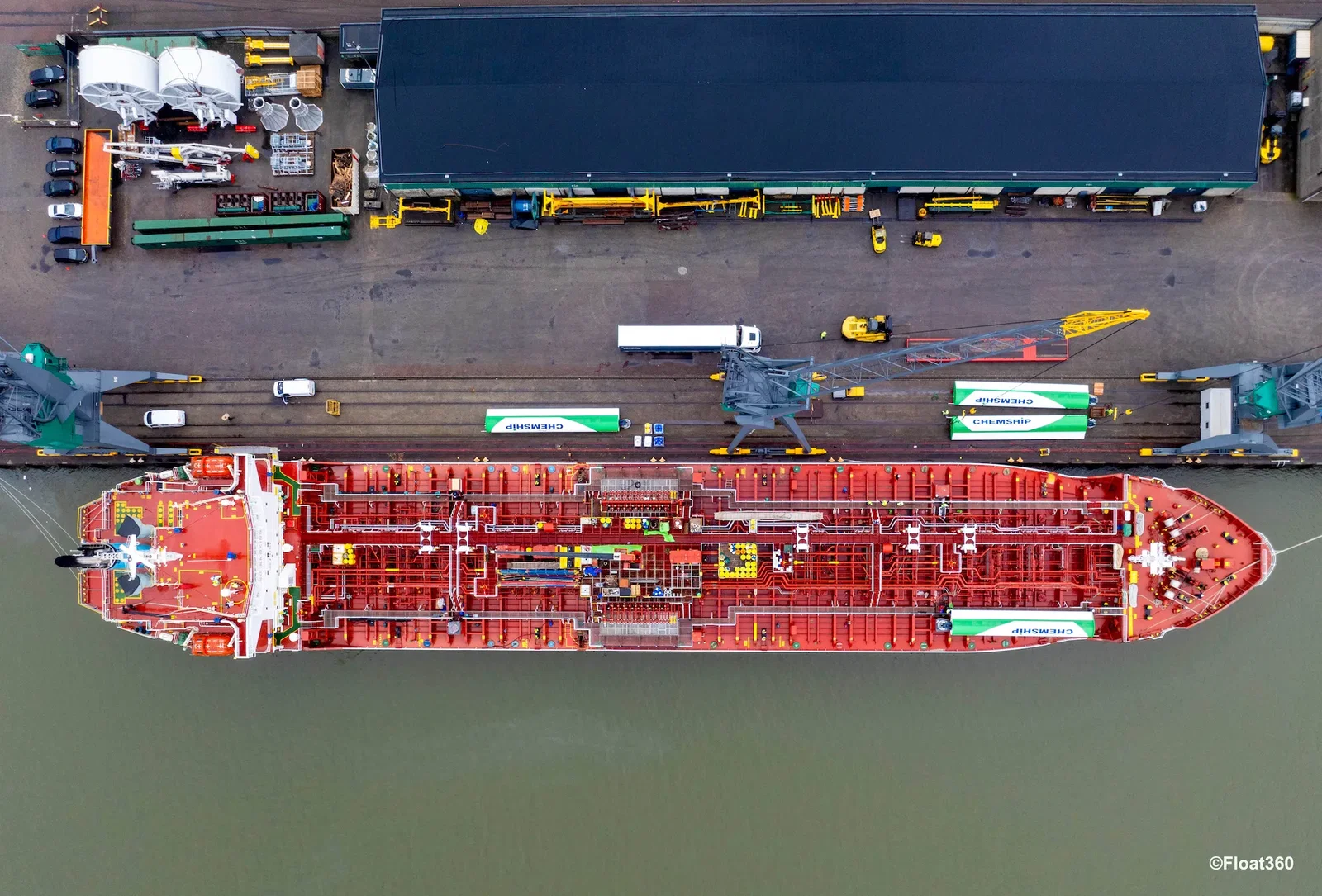
Berth operations — terminal handling and vessel turnaround govern the demurrage exposure on every parcel
Table 7 — Vessel classes available to the tradeBar length indicates relative parcel size
Coaster
500 – 3,000 t
Black Sea and short-sea parcels; can work minor ports and river berths
Handysize
20,000 – 35,000 t
The classic geared bulk carrier; self-discharging at ports without shore cranes
Handymax
35,000 – 50,000 t
Larger geared tonnage for consolidated multi-buyer parcels
Supramax
50,000 – 60,000 t
Long-haul industrial pellet trades
Ultramax
60,000 – 65,000 t
Modern eco-design successor to Supramax
Panamax
65,000 – 82,000 t
Gearless; requires shore discharge equipment
Kamsarmax
82,000 – 85,000 t
Maximum practical parcel for the pellet trade
Geared or gearless
Handysize and Handymax tonnage carries its own cranes and can therefore work ports with limited shore equipment — a decisive advantage in secondary Black Sea and Mediterranean berths. From Panamax upward the vessel is gearless and depends entirely on the receiving terminal, which narrows the list of ports that can take the cargo and lengthens the queue at those that can.
Cube before weight
At a bulk density of six hundred to seven hundred and fifty kilograms per cubic metre, pellets stow at well over one and a third cubic metres to the tonne. Every stowage plan, hold cleanliness certificate and ventilation regime is written around that number, and around the requirement that the hold be dry, previously clean and free of any cargo residue that would compromise a food-adjacent, certified product.
10 / 12Logistics · Corridors and transit
Works gate to buyer's yard
Two corridors serve Türkiye. The first runs west and south from the Siberian and northern mills by rail to Novorossiysk on the Black Sea, then by sea through the Bosphorus to İstanbul, Mersin or İzmir. The second reaches the same market through Central Asia — rail to Aktau, ferry across the Caspian to Baku, then rail through the Caucasus to Mersin. Which one is used depends on the origin mill, the season and the availability of wagons and ferry slots.
Transport is not a footnote to this trade; it is frequently comparable in magnitude to the cost of production itself. That is why a serious quotation is corridor-specific and time-specific rather than a single number — rail tariffs, ferry rates, transhipment charges, vessel hire, port dues, season, bunker prices and exchange rates all move independently, and a figure calculated once is stale within weeks.
Corridor ARussian Federation → Türkiye, via the Black Sea
Krasnoyarsk
Rail
Novorossiysk
Terminal
Black Sea
Bosphorus
İstanbul
Buyer's yard
Corridor BKazakhstan → Türkiye, via the Caspian and Caucasus
EXW works
Rail
Aktau port
Ferry
Baku
Rail
Mersin
Buyer
Table 8 — Reference transit schedule, 4,000 t via Corridor A
Leg
Distance / mode
Transit
What the stage covers
Rail haul
≈ 4,800 km
12 – 15 days
62 – 65 covered or gondola wagons for a 4,000-tonne block train, depending on wagon type and permitted axle load
Novorossiysk terminal
Transfer
2 – 3 days
Wagon reception, discharge, pre-shipment storage, port customs formalities and loading to vessel
Sea passage
Black Sea
≈ 2 days
Coaster or mini-Handysize; Novorossiysk to the Bosphorus and into İstanbul
Berthing wait
Queue
1 – 3 days
Vessel waiting for a berth — the least predictable element of the schedule
Discharge & clearance
Turkish port
1 – 2 days
Unloading, port dues, terminal services, customs clearance and agency
Delivery to store
Road
up to 1 day
Final road leg to a warehouse in the İstanbul industrial belt
Door to door
Multimodal
18 – 25 days
Works gate in the Russian Federation to the buyer's store in Türkiye, for a 4,000-tonne parcel in 1,500 kg bulk bags
Türkiye as the hinge
Türkiye is becoming a significant logistics hub between the Russian Federation, the Caucasus, Central Asia and the Mediterranean basin. Subject to compliance with legal requirements and product certification, supply can be arranged through Turkish ports both for the domestic market and for subsequent re-export. For a buyer whose business is international trade rather than heating alone, that dual character — an end market and a transit platform in the same jurisdiction — is the most commercially interesting feature of this corridor.
The schedule above is the observed transit profile for a full 4,000-tonne block movement and is indicative rather than guaranteed. Berthing delay is the principal variable. Where delivery is arranged on CIF terms, cargo insurance, pre-shipment inspection where requested, certificate of origin, phytosanitary certification where required and letter-of-credit banking charges sit outside the transit schedule and are addressed separately.
11 / 12Storage · Handling · Safety
What the fuel demands once it arrives
Wood pellets are a benign fuel to burn and a demanding one to store. The properties that make them attractive — high density, low moisture, free-flowing behaviour, biological origin — are the same properties that create the hazards below when a large mass of them sits in an enclosed space for weeks. None of these risks is exotic and none is difficult to manage, but all of them are unforgiving of a store that was designed as a room rather than as a silo.
A buyer taking bulk delivery should therefore treat the receiving store as process equipment: sealed against water, ventilated by design, instrumented for temperature and carbon monoxide, and entered under a written procedure. A buyer taking bagged product has a far simpler problem — keep the pallets covered, off the ground and out of direct weather — but the warehouse holding them still accumulates carbon monoxide and still needs air movement.
Moisture ingress
Absolute exclusion
A pellet that takes on water swells, loses its lignin bond and reverts to sawdust. It will bridge in a silo, jam an auger and stop a boiler. Elevated moisture is also the precondition for every other hazard on this list, which is why dry storage is the single non-negotiable requirement of the fuel.
Self-heating
Above 60 °C
Stored biomass generates heat through slow biological and oxidative activity. Once the mass passes roughly sixty degrees the process accelerates, and in a large, poorly ventilated store it can run away. Temperature monitoring in deep bulk storage is standard practice for this reason.
Off-gassing
CO, CO₂, CH₄
All biomass decomposes slowly and releases carbon monoxide, carbon dioxide and methane as it does. Concentrations rise with temperature and moisture. Measurements in warehouses holding bagged pellets have recorded eight-hour average carbon monoxide levels reaching occupational exposure limits.
Oxygen depletion
Confined space
The same reactions consume oxygen. A pellet store — silo, bunker or sealed room — must be treated as a confined space with formal entry procedures, forced ventilation before entry and carbon monoxide detection. This is not a precaution; it has been the cause of fatalities.
Dust and fines
Explosible
Fine wood dust generated by attrition in handling is combustible and, in suspension at sufficient concentration, explosible. Screening before packing, minimising free-fall drop heights and controlling dust at transfer points are the practical mitigations.
Swelling damage
Structural
Pellets that absorb water expand with considerable force. A flooded silo or bunker can be structurally damaged by the expansion of its own contents, which is why store design addresses water ingress as a load case and not merely as a fuel-quality issue.
ISO 20023
The international reference is ISO 20023, which sets out principles and requirements for the safe handling and storage of wood pellets in residential and other small-scale applications. It covers the chain from loading through delivery to store design, and addresses fire, dust explosion, off-gassing, oxygen depletion, damage caused by swelling, and the associated health risks. Any buyer commissioning a new pellet store should have this document in front of them before the store is built rather than after the first delivery.
12 / 12Markets · Where the world burns pellets
A commodity with two separate markets
The pellet trade is really two trades that happen to share a name. One moves industrial-grade tonnage in Panamax parcels to power stations in the United Kingdom, the Netherlands and Japan, and competes with coal. The other moves certified A1 product in fifteen-kilogram sacks to households in Italy, Germany and France, and competes with heating oil and gas. They have different specifications, different logistics, different seasonality and different buyers.
≈ 50 MtGlobal productionAnnual, and rising year on year
≈ 20 MtHeating demandResidential and commercial share of the total
≈ 72 %European shareOf world demand, by value
≈ 7 %Compound growthMarket CAGR through the forecast period
Table 9 — Principal destination markets and their demand profile
Market
Grade drawn
Principal use
Character of demand
United Kingdom
Industrial
Power stations
Overwhelmingly power generation. Converted coal units burn industrial-grade pellets at utility scale, which makes the UK the single largest tonnage destination in Europe.
Germany
A1 premium
Domestic · municipal
Residential heating and municipal boiler houses. A deep, mature installed base of automatic domestic boilers and the most demanding retail quality expectations in Europe.
Italy
A1 premium
Pellet stoves
The largest stove market on the continent. Consumption is dominated by room heaters fed from 15 kg retail sacks rather than by central boilers.
France
A1 / A2
District heating
Substantial volumes into district heating alongside a fast-growing domestic sector, supported by long-running renewable heat incentives.
Netherlands
Industrial
Industry · transit
Large industrial consumption, much of it associated with co-firing and with the port infrastructure that redistributes cargo into the wider northwest European market.
Japan
Industrial
Co-firing
Co-firing with coal in thermal power stations under national biomass policy — together with South Korea, the anchor of the Asian import trade.
The scale of the market
Global production has passed fifty million tonnes a year and continues to grow at high single digits. Europe remains the dominant consuming region by a wide margin, but the fastest incremental growth is now in the Asia-Pacific, driven by co-firing mandates in Japan and South Korea and by early pilot programmes in China and India. The heating segment alone accounts for roughly twenty million tonnes of that total.
The Turkish position
Türkiye sits at an unusual point in this map. Domestic demand is growing, particularly across central Anatolia, but the market is still young: in settlements without mains gas, buyers default to the coal they know rather than to a fuel they have not yet been shown. That is a product-awareness problem rather than an economic one, and it is precisely the gap a well-documented, certified, consistently supplied premium pellet is positioned to close.
Annex AAssurance · Documentary schedule
The paper that carries the tonne
Product is supplied exclusively in accordance with international quality standards, with ISO 17225 as the foundation. That standard defines the origin of the raw material, the dimensions, the moisture content, the density, the calorific value, the ash content and the mechanical durability — and the European ENplus certification system is built directly upon it. The same standard is applied when product is delivered to the end customer, not only when it leaves the mill.
In practice a buyer never inspects a pellet; a buyer inspects a document set. The schedule below is the full complement that travels with a certified consignment. Some of it is standing evidence about the producer, some is generated per lot, and some is commissioned by the buyer at their own election — independent inspection by SGS or Bureau Veritas being the usual instrument where a first shipment is being established.
Certified lots held in covered store awaiting inspection release and rail allocation
Table 10 — Documentary schedule for a certified consignment
Document
Issued by
Frequency
What it establishes
Certificate of analysis
Producing mill
Per lot
The full ISO 17225-2 parameter set for the batch as pressed and packed — the document against which the consignment is accepted or rejected.
ENplus / DINplus certificate
Certification body
Standing
Evidence that the producer operates a certified quality system, not merely that one sample passed. Carries the producer's unique ENplus identification.
Third-party inspection
SGS / Bureau Veritas
On request
Independent draft survey, sampling and laboratory analysis at load or discharge, commissioned by the buyer where the contract calls for it.
Certificate of origin
Chamber of commerce
Per shipment
Establishes the origin of the goods for customs treatment and for the buyer's own compliance record.
Phytosanitary certificate
Plant protection authority
Where required
Required for wood-based cargo into certain jurisdictions; confirms the consignment is free of regulated pests.
Cargo insurance
Underwriter
CIF terms
Marine cover for the parcel through the sea leg, arranged where the contract is concluded on cost, insurance and freight terms.
Bill of lading & manifest
Carrier / agent
Per shipment
Title, quantity, marks, stowage and the vessel's declaration of what was loaded and in what condition.
Letter of credit documents
Banks
Per contract
The documentary set the confirming bank will examine. Banking charges under a letter of credit sit outside the freight cost and are borne as agreed between the parties.
Under CIF terms the cost of cargo insurance, independent inspection where requested, certificate of origin, phytosanitary certification where applicable and letter-of-credit banking charges are additional to the freight calculation and are set out separately in the commercial offer. All supply under this dossier is arranged in compliance with the legal and certification requirements applicable in the jurisdictions of transit and destination.
A pellet is only as good as the last parameter nobody checked. Everything in this dossier exists so that no parameter goes unchecked — and so that the tonne arriving in İstanbul is the same tonne that was certified when it left the cooler.
Specification summary at a glance
Product
ENplus A1 / DINplus wood pellets
Specification
ISO 17225-2, ash ≤ 0.7 %, durability ≥ 98 %
Diameter
6 mm / 8 mm
Packaging
15 kg sacks · 500–1,500 kg FIBC · loose bulk
Opening volume
3,000 – 4,000 t per month
Scalable to
25,000 t per month, and beyond by agreement
Corridors
Black Sea via Novorossiysk · Caspian via Aktau–Baku
Door-to-door transit
18 – 25 days to an İstanbul store
Supplier
GAZ-TRANS INTERNATIONAL Oil Group
Foreign Sales Department
Authorised representative for export supply of solid biofuel and petrochemical products
Intermediary in Türkiye
NİMPRECAST Yapı Elemanları Sanayi Ticaret Ltd. Şti.
Tarabya Mah. Yeniköy Tarabya Cad. No: 12/1
Sarıyer / İstanbul, Türkiye
www.nimprecast.com.tr
Enquiries
Technical and commercial correspondence
info@nimprecast.com.tr
Specification, sampling, inspection arrangements and corridor-specific delivery schedules on request.